Showing posts with label adobe slate. Show all posts

Wednesday, September 30, 2015

Published 7:50 AM by with 0 comment

As Time Goes By - Finding the Photographer Within


Photography, for me at least, has been a solitary endeavor and I like it that way. When I grab my camera and drive to some new (or familiar) location, part of the excitement is not knowing what I will create and not having to worry about anything or anyone. I like to let what's in front of me slowly unfold until it eventually reveals itself.
Some will argue that taking a photograph is simply extracting part of a scene that already exists so there's no real interpretation involved on the part of the photographer. I don't subscribe to this notion.
The famed photographer Henri Cartier-Bresson once said "Your first 10,000 photographs are your worst." I think that's true but it took me a long time to truly understand what he meant.
When I started capturing still images, I wanted to be an accomplished photographer right away and...I was...in my own mind. What I've realized since then is that my ability to assess my own progress has shifted at the same rate as my accumulated experience. When I first began capturing images, I had no real sense of what I wanted to do. My time shooting up to that point was quite limited and I had learned very little. In my naïveté, I thought my photographs were really something special. When I look back on that work now, with over ten years of experience under my belt, my photographs seem positively amateurish.
I believe in the old adage that says "there is no substitute for experience". When I bought my first serious camera, I read every single photography book I could find. While they all helped me to understand and operate my camera, none really taught me how to be a photographer. There were many volumes that discussed the philosophy of capturing an image but it didn't mean anything until I actually began shooting and, over time, discovered my own vision.
Then one day everything began to make sense. I understood that I was no longer a simple practitioner of the medium, in fact the camera itself was now just a means to an end. Photography, I realized, started with an urge to create. It was no longer important for me to capture a technically perfect image, although I understood the theory of how to do that. What was important was knowing how to capture the essence of my response to a place, person or thing and present those thoughts and emotions in a two dimensional picture.
One of the highest compliments I have ever received from someone was when he told me that I helped him see the extraordinary in the ordinary. Suddenly, he was able to see a beauty in his daily life that had previously eluded him. Wow.
So what am I trying to say here? I think there are two types of photography. One is where the scene is captured as faithfully as possible and the camera does most of the work. The other has the photographer, as faithfully as possible, capturing his or her vision in a coherent image.
A tall order? Yes, but there are countless photographers out there who have tapped into this realm. Ansel Adams did it in his landscape work. Sebastiäo Salgado does it in his epic portrait and environmental images. Richard Avedon transcended portraiture and fashion to an art form. These are just a few examples but the list goes on.
There are times when I feel like I have found a portal into this world. I feel it when i hold my camera and look through the viewfinder. What I see is constantly a wonder to me and my excitement is almost always brimming over the edge. I think it's that reverence for image making that keeps my passion alive.
In the meantime, I know that when ten more years have passed, I will look back on my present work and feel the evolution of my thoughts and ideas. I'm curious to know what my future self will make of the person presently sitting in this chair. Only time will tell.
My initial idea for this blog post was to write about my recent visit to Balboa Park in San Diego but I obviously went off on a serious tangent. That being said, I'll mention it briefly now.
When I first arrived at the park it was to meet up with a group of photographers for the global 500px/Fujifilm Photowalk. Sadly, I mixed up the actual meeting place and missed the event. I was with my daughter Tara so we decided to do our own walk instead. No point in squandering an opportunity to shoot such a beautiful venue.



Balboa Park is all about light and depth

Who could resist shooting this very cool sculpture?

This sign and the texture of the wall reminded me of an old Charlton Heston-style movie.

I don't shoot many candid moments but I liked this man's stance and his big hat.

Something about the shadow of the stair rail in the background caught my eye.

The silhouette of the rail and the textures drew me in to this composition.


A Lost World
Walking around the wonderful grounds of Balboa Park makes me feel like I am exploring another planet. It's hard to believe downtown San Diego is just a mile away going about its business.


Exotic Land
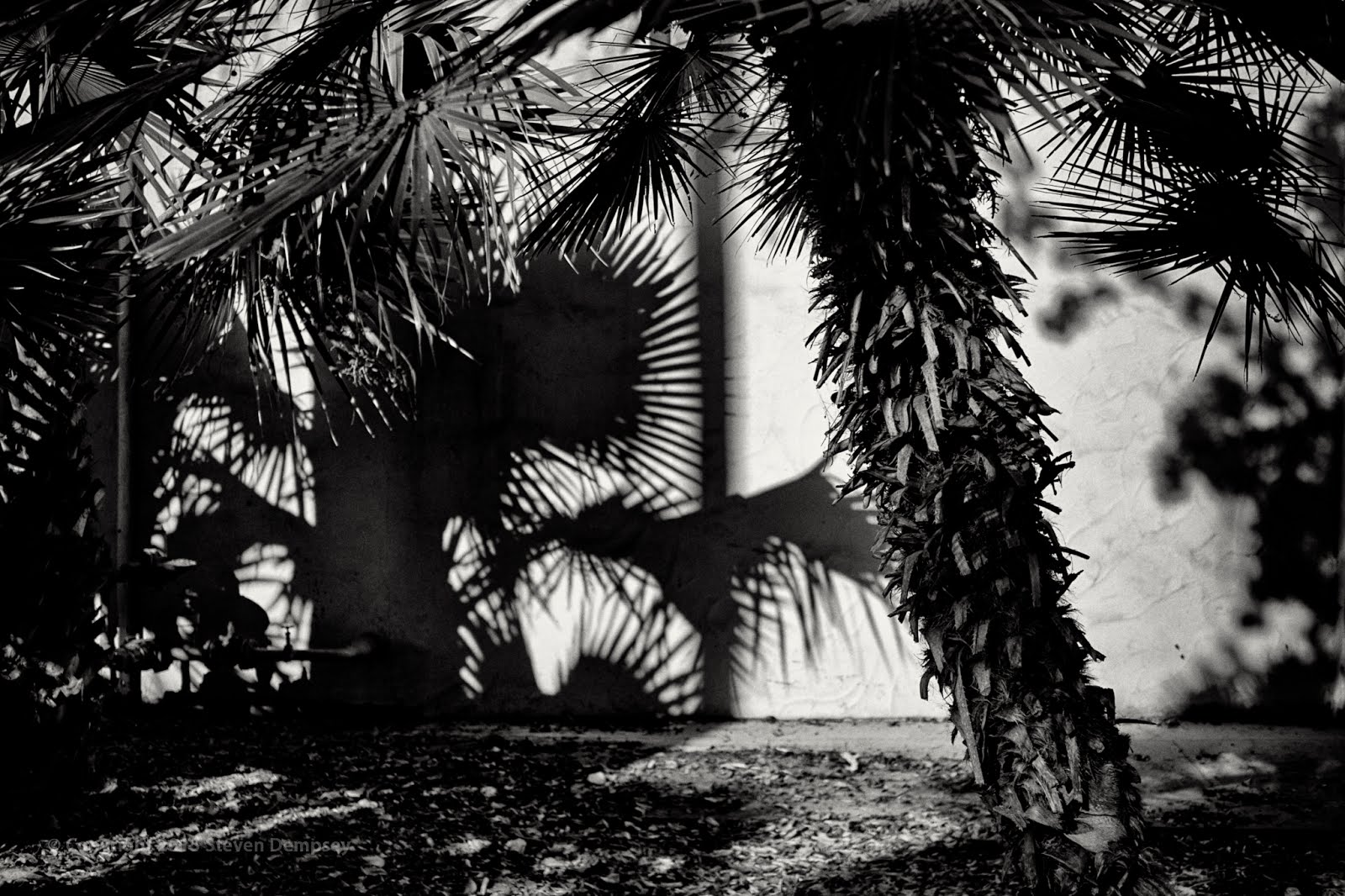
Not exactly exotic to those who live here but, to me, these trees represent something unfamiliar. This is especially so given my previous abodes in Ireland, New York and Seattle. It is fascinating to me that these long skinny trunks don't just keel over.


I think this door is really interesting for reasons I can't describe. 

Shooting places and things is one thing but once a person is inserted into the mix, the entire meaning is transformed. Tara is really photogenic and is very comfortable in front of the camera. Her dress and hat gave her a classic look that worked well with black and white. The resulting shots made me think of a spread in Vogue Magazine from the fifties.


Tara contrasts dramatically with the light and architecture.

This young child unexpectedly bolted across the frame just as I pressed the shutter.

My Adobe Spark (formerly Slate) presentation of this post is available here

If you would like to keep up with my travels, sign up to be notified of new posts. Peace.
Read More
      edit

Tuesday, September 22, 2015

Published 10:15 AM by with 2 comments

The Color of Autumn - A Season of Transformation


When I was growing up in Ireland, autumn always signaled a time to gather horse chestnuts for a game we played called Conkers. The goal was to separate the chestnut from its prickly skin and thread a string through it. I would then take turns with my opponent to try to smash his chestnut with my own.

It was pretty primitive entertainment but, by cracky, we made it work and had fun nonetheless. Of course I also noticed the leaves and colors of the season but it was more in my periphery than something that really made an impact.


The Road to Creede in Colorado.

For me now as a photographer, autumn is a transformation of the summer landscape into a magical kaleidoscope. It's the season where nature is screaming to be heard, although, it certainly doesn't need to raise its voice too loud to get my attention.

Living on the road poses unique challenges where I actually have to track the season down. Some states I've been to don't even have fall. As a result, Linda and I try to plan our travels to include places where we can do our best leaf-peeping.

Our campsite at Elk Creek near Gunnison in Colorado.
When I visited Colorado recently, fall had not quite arrived. There were hints of it, alright, but the cavalcade of color I was expecting was still a few weeks away. In order to seek out those desirable shades of red, orange and yellow, I had to drive to higher elevations and by higher, I mean over 10,000 feet.
The road from Gunnison to Creede in Colorado is a feast for the eyes. There are beautiful mountain and meadow views in every direction. To describe it as epic would barely scratch the surface of the visual experience. As the road literally began to rise past the little town of Lake City, the rich colors I was after began to show face.


Wonderful fall colors on the way to Creede.
There is an observation area along the way, at an elevation of over 11,000 feet, called Windy Point that has phenomenal views of the San Juan mountains and the lush valley below. While there, the weather was favorable for dramatic light. Sunbeams moved about like a searchlight. One moment they would sweep across the valley floor and in another instant, would light up the colorful peaks. Every photograph was different, despite being only seconds apart. I felt like these images were going to be my best work.
Later, when I was capturing and sorting, I hurriedly scrolled to the Windy Point photographs, eager to see my masterpieces. The first few looked really busy and the compositions were unbalanced. Oh well, I thought, these are just a result of me getting my bearings. As I went through the rest, I became more and more disappointed. There was just too much going on in each frame. In general, I prefer simple compositions but these images had no structure, no focal point. There were a few I could rescue by cropping but, all in all, I was pretty bummed.

Fantastic view but a compositional failure, in my opinion.

This one is a little better. The vivid colors help somewhat with the balance of the picture.
There's an argument to be made for using a tripod and it's not just to keep everything steady. When I tether the camera to a firm set of sticks, suddenly the act of making a photograph takes on more importance. There is more deliberation and intention to the task at hand. When I look through the viewfinder, I tend to pay a lot more attention to the composition. It's a less frenetic experience, as it is when I am freely wielding the camera from left to right or up and down, reacting to what's happening in front of me.
There's absolutely nothing wrong with shooting handheld, but perhaps if I had used a tripod for the vista at Windy Point, the pictures would have been better. I simply would have taken more time and care while composing each picture. I don't know but this kind of thing has happened to me before. I get excited about what I'm seeing, click the shutter until my finger goes numb and feel like I've captured the photograph of the century. Only, I didn't and the images don't even make the first cut.
Luckily for me, there were literally hundreds of opportunities along the road to Creede to make up for the lackluster batch At Windy Point.

This is one of my favorite shots. The row of trees make a lovely autumn motif and frames the photograph nicely.

So, maybe I need to slow things down a bit. Instead of finding ten places to stop on a single trip, I might yield more success if I pick, say, three spots to shoot. If I use my tripod and be really mindful to what I'm seeing, it's possible I might just find the composition that looks as good at home on my computer as it did in the field.

Mountains and Valleys
The colors of the mountains in this area of Colorado are just gorgeous. Add some fall tones to the mix and the resulting cocktail is delicious.


Fall Preview
When we first arrived in Colorado, there were only hints of the colors to come, the trailer to the big movie, if you will. Here, by the Taylor Reservoir, a few flecks of yellow look like dabs of paint from an artist's paintbrush.


Despite all, I still feel like I left beautiful Colorado with a nice collection of photographs that adequately capture the experience of being there. In the meantime, I'm looking forward to trying new techniques in my quest for the perfect image.

While not a fall-themed image, I really like this shot from our first morning at Elk Creek.

One of the last sunsets as we bid farewell to Colorado.

My Adobe Spark (formerly Slate) presentation of this post is available here

If you would like to keep up with my travels, sign up to be notified of new posts. Peace.

Read More
      edit

Thursday, July 09, 2015

Published 3:42 PM by with 0 comment

Eye of the Beholder - Select Photographs

Without a doubt, photographers have the hardest time selecting their own best work. There is a number of factors, in my experience anyway, that lead to this dilemma...
When a viewer looks at a photograph, he or she sees a composition that is either compelling or not. Although, with so many images being produced these days, getting someone's attention is harder than ever.
So why is it so hard for a photographer to select a good shot? It starts with the process of capturing. Of all the senses that are alive while I press the shutter, the only one directly translated to the viewer is sight. There is no trace of the gentle breeze, no sounds of a distant fog horn, no feeling of the dampness in the air and no hint of what I was thinking. Some of these things can be represented visually, but mostly not when they're either subtle or intangible.
When I cull through my own photographs, the memories of what I felt in that frozen moment are very much alive. I am somewhat blind to what is technically good or visually interesting to someone else because I'm so emotionally involved. For this reason, it's occasionally surprising that some of my favorite shots are not greeted with the enthusiasm I initially imagined. Through my own insecurity, I may then feel compelled to explain why I like a particular shot. This is not preferable because a photograph, unless it's a faithful rendering of something, say for journalistic purposes, shouldn't need any explanation.
At some point, I've had to let go of the need for others to like my work. I've been capturing images for about fourteen years now and I'm just beginning to understand this concept. There is a real danger, in any kind of creative medium, of over-thinking what will be acceptable to the masses and that kind of approach only ever leads to mediocre results. I believe that, if I listen to my own voice and trust it, an appreciation of the work will naturally follow.
With that said, I'd like to share some of my recent photographs. Most have been chosen because I think they make good pictures, while others are a little more abstract and appeal to me on a deeper emotional level. Where I feel it's important, I've included a little context.

One of the massive ancient trees at the Hoh Rain Forest.

Hoh Rain Forest in Washington.
Lake Crescent in Washington.

At the water's edge on Benson Beach in Washington.

Tidal pools and gull on Benson Beach.

Drawn to the Ocean
Any kind of beach fires up my imagination. I feel insignificant in its grandeur and that is strangely comforting. I suppose it makes me feel like any problems I may have get sucked up in the wind and carried out to sea. Of course, none of that is true but it is for as long as I'm standing there.


A Childhood Memory
When I was young, my family would take a vacation each summer. It was usually to some coastal resort and nearly all of them had one of these viewers. It was such a thrill to see birds and ships close up. We never owned binoculars so the novelty was always new.


A Decisive Moment
I liked the look of this aquarium in Wesport in Washington. I lined up my composition and, as I pressed the shutter, this man walked out of the doorway. For me, it wound up making the shot really interesting. In particular, his visual connection with the camera at that moment was unexpected. While it wasn't technically decisive, it certainly was serendipitous.


The town of Westport.

Gulls at the harbor in Westport.

Dad jumps over tidal pools while Mom and daughter look on.


While in Astoria, Oregon, we toured a lightship. I'm partial to this kind of interior design.

This shallow depth of field in black and white, for me, creates a very distinctive mood.

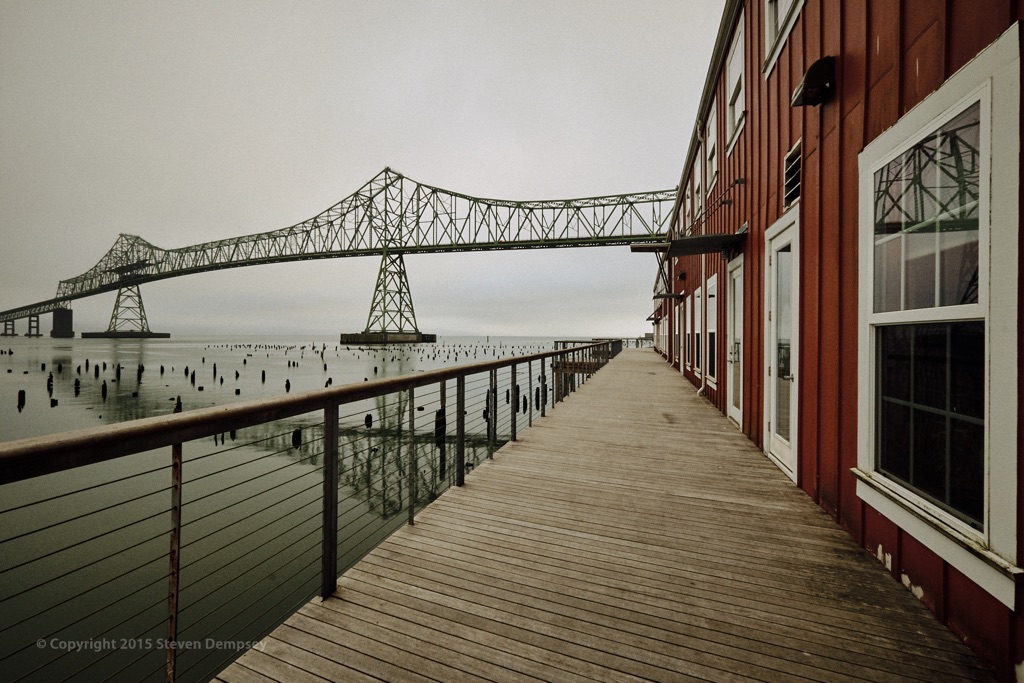
Astoria Bridge in early morning light.

The wreck of the Peter Iredale ship at Fort Stevens State Park in Oregon.

Afterglow. The last glimmer of light at Salt Creek in Washington.

For those interested, all photographs were shot using a Fujifilm X-T1 camera with the following lenses: 35mm, 10-24mm, 56mm, 18-135mm.

My Adobe Spark (formerly Slate) presentation of this post is available 
here

If you would like to keep up with my travels, sign up to be notified of new posts. Peace.
Read More
      edit