Showing posts with label Oregon. Show all posts

Friday, April 22, 2016

Published 9:57 PM by with 0 comment

Image Acquisition - Best Practices


I think it's fair to say that, for most people, the immediacy of digital photography is preferred over the film equivalent of the good old days. It's certainly less expensive than film, costing virtually nothing to shoot as many images as we please. This can also lead to the side effect of amassing gigabytes of unneeded and unwanted image files.


Recently, I began to run out of space on my two main hard drives. I examined the data in greater detail and found that I had tens of thousands of photographs just sitting there unedited. The actual quantity of images didn't really surprise me but it was a wakeup call nonetheless. I realized that I'm shooting more photographs than I can ever mentally or digitally process. So it made me think about changing a few of bad habits.


1. Slow down and pay attention - When possible, I will put on the brakes while photographing a subject. I will try to imagine only having 12 exposures on a roll of film so that every shot counts. Each composition needs to be studied and fully contemplated before I press the shutter (assuming it's not an action or event-based scene). This is a good exercise in general because it will yield fewer photos and more "keepers".
2. Keywords - Most all photo editing software allows you to add keywords to the metadata in your image. It's wise to do this at the capture stage so that image of your dog in Barbados can be easily found amongst the thousand shots you took of your cat in Barbados. I haven't been doing this consistently so I will fix that right now.
3. Delete, delete, delete - When I have thoroughly reviewed and chosen my best shots, I will trash the rejects. I'm a photo hoarder, never wanting to delete anything for fear I'll need it for some abstract reason in the distant future. In the 15 years I've been shooting, this need has never materialized.


There are those who say that large hard drives are cheap and there's no need to worry about storing thousands of photos. That may be the case but, with some simple media management, I can spend more time editing and less time sorting. That's what I want.


Digital photography is a truly amazing medium and we have all the tools needed to manage our photographs efficiently. I think a marriage of today's technology and some time-honored principles from the past will make the experience more productive...and enjoyable.


My Adobe Spark (formerly Slate) presentation of this post is available here

If you would like to keep up with my travels, sign up to be notified of new posts. Peace.
Read More
      edit

Thursday, July 09, 2015

Published 3:42 PM by with 0 comment

Eye of the Beholder - Select Photographs

Without a doubt, photographers have the hardest time selecting their own best work. There is a number of factors, in my experience anyway, that lead to this dilemma...
When a viewer looks at a photograph, he or she sees a composition that is either compelling or not. Although, with so many images being produced these days, getting someone's attention is harder than ever.
So why is it so hard for a photographer to select a good shot? It starts with the process of capturing. Of all the senses that are alive while I press the shutter, the only one directly translated to the viewer is sight. There is no trace of the gentle breeze, no sounds of a distant fog horn, no feeling of the dampness in the air and no hint of what I was thinking. Some of these things can be represented visually, but mostly not when they're either subtle or intangible.
When I cull through my own photographs, the memories of what I felt in that frozen moment are very much alive. I am somewhat blind to what is technically good or visually interesting to someone else because I'm so emotionally involved. For this reason, it's occasionally surprising that some of my favorite shots are not greeted with the enthusiasm I initially imagined. Through my own insecurity, I may then feel compelled to explain why I like a particular shot. This is not preferable because a photograph, unless it's a faithful rendering of something, say for journalistic purposes, shouldn't need any explanation.
At some point, I've had to let go of the need for others to like my work. I've been capturing images for about fourteen years now and I'm just beginning to understand this concept. There is a real danger, in any kind of creative medium, of over-thinking what will be acceptable to the masses and that kind of approach only ever leads to mediocre results. I believe that, if I listen to my own voice and trust it, an appreciation of the work will naturally follow.
With that said, I'd like to share some of my recent photographs. Most have been chosen because I think they make good pictures, while others are a little more abstract and appeal to me on a deeper emotional level. Where I feel it's important, I've included a little context.

One of the massive ancient trees at the Hoh Rain Forest.

Hoh Rain Forest in Washington.
Lake Crescent in Washington.

At the water's edge on Benson Beach in Washington.

Tidal pools and gull on Benson Beach.

Drawn to the Ocean
Any kind of beach fires up my imagination. I feel insignificant in its grandeur and that is strangely comforting. I suppose it makes me feel like any problems I may have get sucked up in the wind and carried out to sea. Of course, none of that is true but it is for as long as I'm standing there.


A Childhood Memory
When I was young, my family would take a vacation each summer. It was usually to some coastal resort and nearly all of them had one of these viewers. It was such a thrill to see birds and ships close up. We never owned binoculars so the novelty was always new.


A Decisive Moment
I liked the look of this aquarium in Wesport in Washington. I lined up my composition and, as I pressed the shutter, this man walked out of the doorway. For me, it wound up making the shot really interesting. In particular, his visual connection with the camera at that moment was unexpected. While it wasn't technically decisive, it certainly was serendipitous.


The town of Westport.

Gulls at the harbor in Westport.

Dad jumps over tidal pools while Mom and daughter look on.


While in Astoria, Oregon, we toured a lightship. I'm partial to this kind of interior design.

This shallow depth of field in black and white, for me, creates a very distinctive mood.

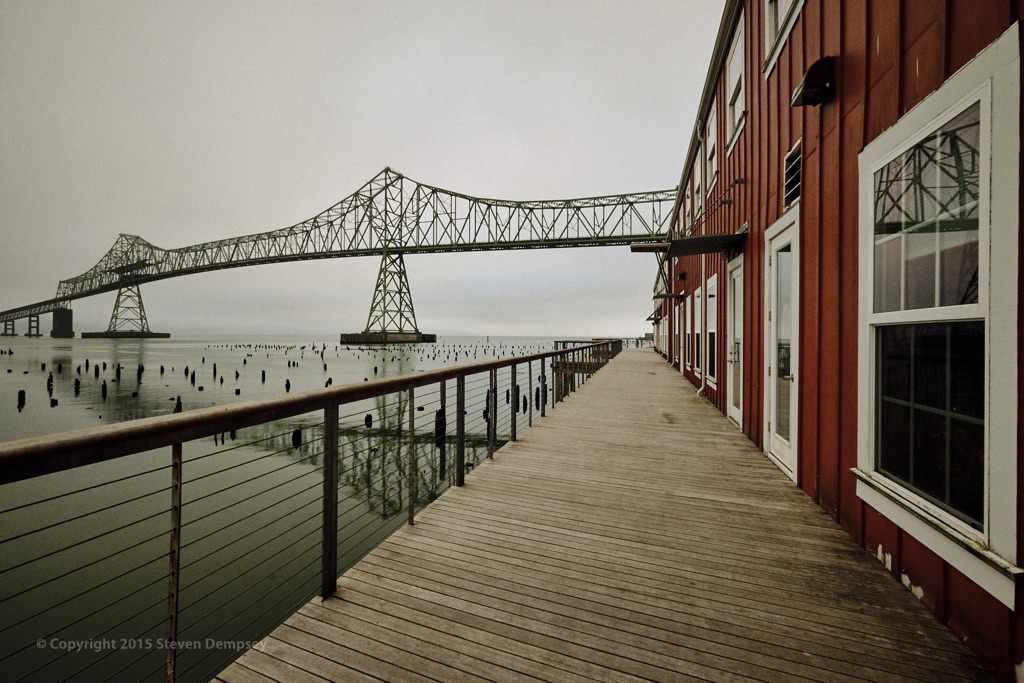
Astoria Bridge in early morning light.

The wreck of the Peter Iredale ship at Fort Stevens State Park in Oregon.

Afterglow. The last glimmer of light at Salt Creek in Washington.

For those interested, all photographs were shot using a Fujifilm X-T1 camera with the following lenses: 35mm, 10-24mm, 56mm, 18-135mm.

My Adobe Spark (formerly Slate) presentation of this post is available 
here

If you would like to keep up with my travels, sign up to be notified of new posts. Peace.
Read More
      edit

Thursday, May 28, 2015

Published 12:23 PM by with 1 comment

In God's Country - Joseph, Oregon


Wallowa County in Oregon is one of those places where the experience of being there will stay with me forever. The weather is constantly changing, making for marvelous cloud displays and the canyon and lake vistas are second to none. In the town of Joseph, our base for a week, everything was less than an hour away. In fact, many places can be reached on foot, leaving a few less car fumes in the atmosphere.


Wallowa Lake State Park. ISO200 f22 8 seconds.

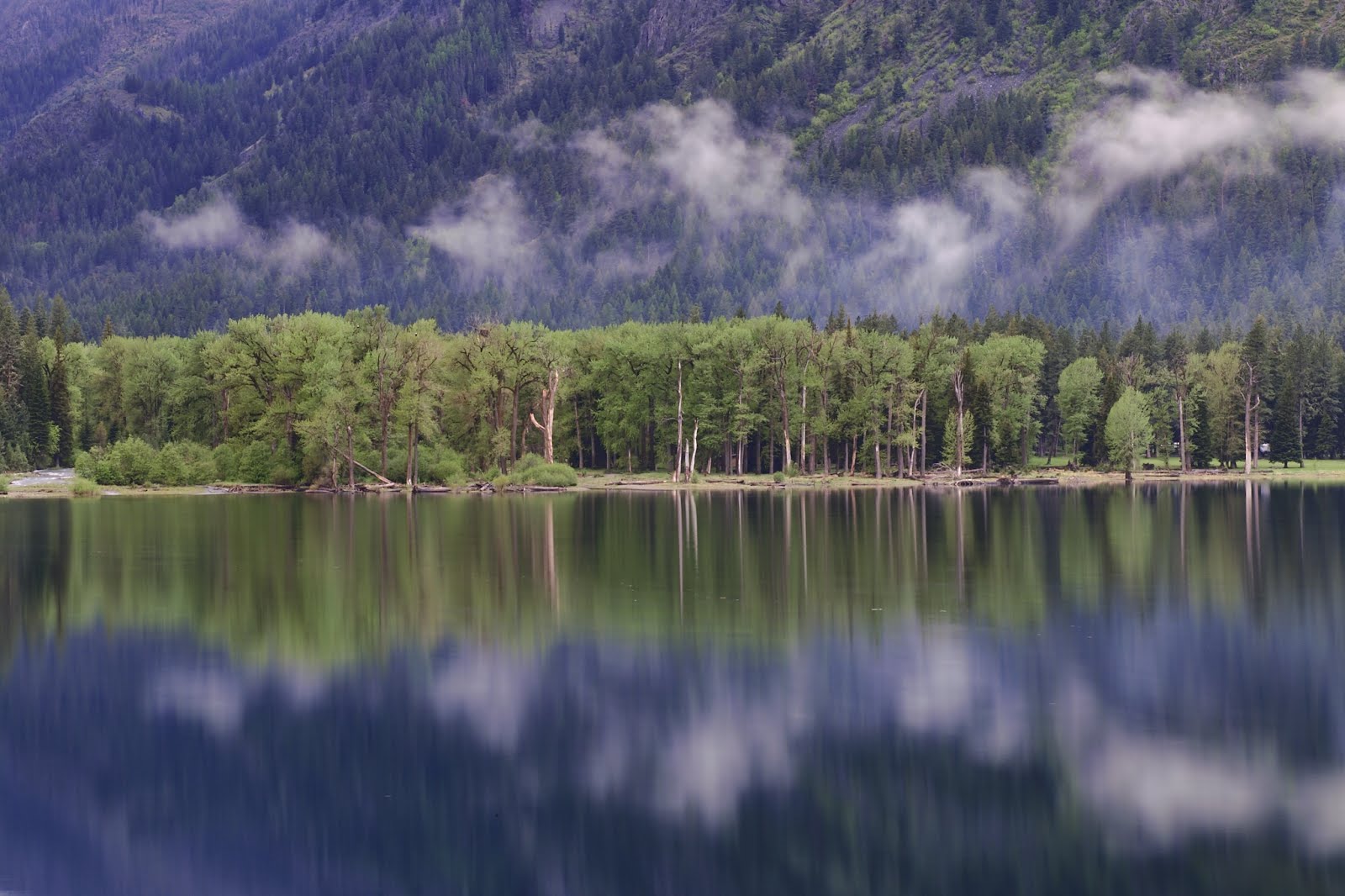
The two shots above and below were made on our first morning in Joseph. I was happy about the cloud cover because I wanted to try some long exposures. The photographs would have been perfectly fine as normal exposures but the water ripples made for poor reflections. Choosing exposures between 8-10 seconds smoothed out the surface of the lake and made it more mirror-like.

Lake Wallowa reflection. ISO200 f22 10 seconds.

Although this is prime hiking country, I have to admit that I did a lot of my sight-seeing by car. Some of it, like Hells Canyon Overlook, is impractical to walk. It's about 40 miles from Joseph and a slow ascent on a winding road, full of extreme bends and unfinished surfaces. When I reached the viewpoint, I found myself alone which, of course, suited me nicely. Visiting these kinds of places at the brink of tourist season usually yields a more intimate appreciation of the scenery.


Plant life at Hells Canyon Overlook.

I sat on a bench just taking in the breathtaking geology and contemplated my insignificance in the grand history of our planet. I find that's a good way to put any problems I may have in perspective.

Hells Canyon
At a depth of a mile and a half and averaging 10 miles in width, Hells Canyon is the deepest gorge in North America. It was carved during the last 2 million years by the Snake River. As I stood by the overlook, a thunderstorm was brewing to the left of me, complete with lightning but it never came overhead. This was pretty typical during the time I was in Wallowa County.


Wildflowers in Bloom
The wildflowers in this area are in abundance from June through early August. While I was there (in late May), the blooms were just beginning but their colors made a sufficiently loud splash on the near and distant hills.


River Rapids
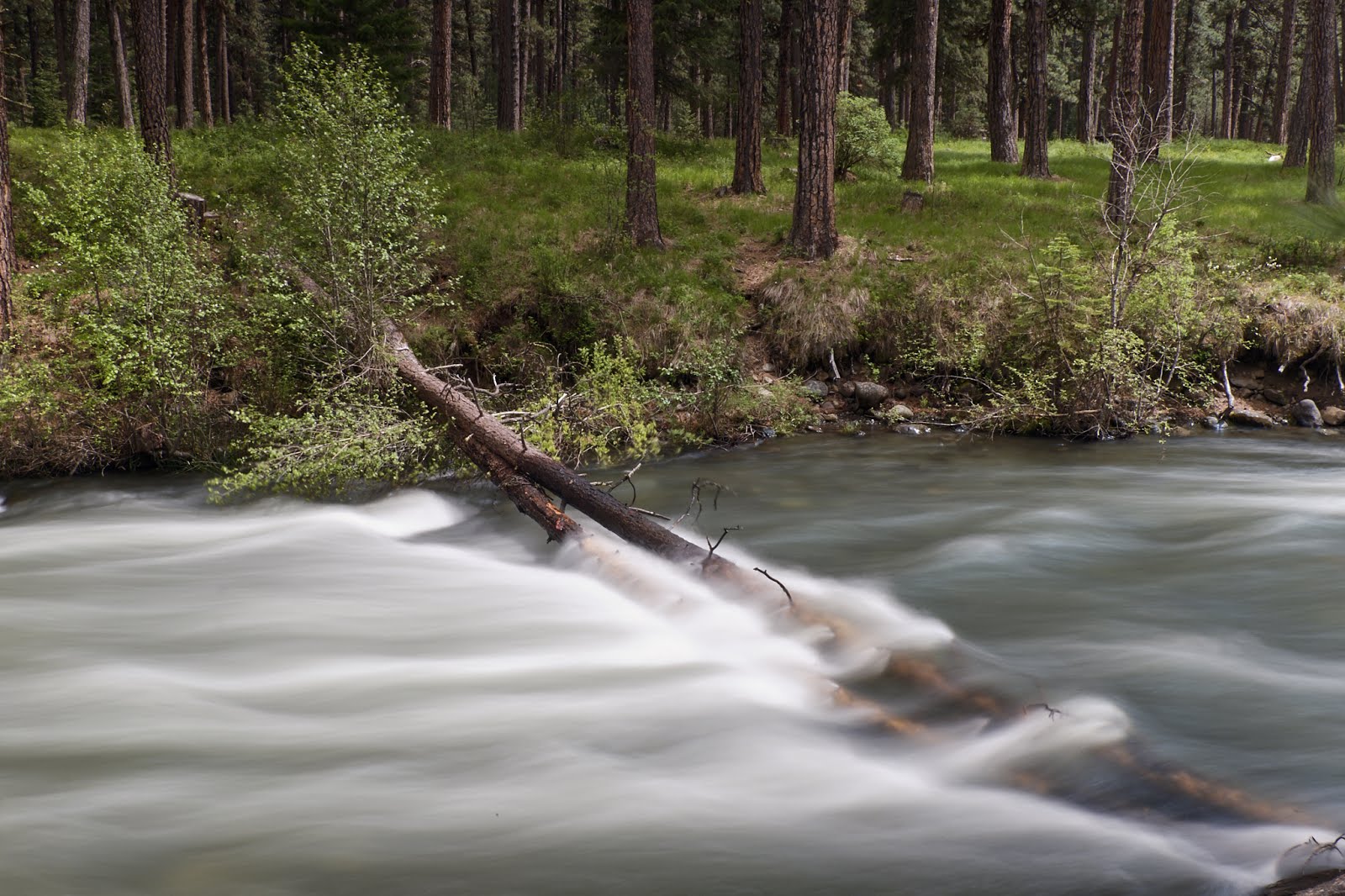
Linda and I noticed that the rivers and streams in Wallowa County seem to flow more quickly than we are used to seeing elsewhere. Further research indicated that this is due to rapid snow melt as the warmer weather takes hold.


The 100-mile round trip drive to Hat Point Overlook was well worth it although we felt like maybe our little compact car might not be able to navigate the rough, steep-grade road to the summit. Arriving at the one-horse town of Imnaha was the easy part. After that it was a 21-mile trek to the top, mostly with only enough width for one car at a time. Sometimes we were so close to the edge of the sheer drop off, I felt like I was in that scene with Lucille Ball in the Long, Long Trailer.

Hat Point Overlook. ISO200 f7.1 1/680

Of course, the views from Hat Point overlook where mind-blowing. It's just hard for me to comprehend the scale of this entire country when I'm standing in my corner of the world looking at something that seems to go on to infinity.

Beautiful light over the Wallowa Mountains on the way to Hat Point Overlook. ISO200 f11 1/180

On my way back to Joseph one day, I noticed how vivid the colors of the grass, mountains and sky were. I saw some cows and thought they'd be a nice foreground subject for a photograph. The colors may look enhanced in this shot but I assure you they are true to life. It's all one big living postcard!

Cows grazing in an idyllic pastoral scene near Joseph, Oregon. ISO200 f11 1/320


Things of InterestI like to photograph something just because it catches my eye. It doesn't have to have some specific purpose or adhere to a certain criteria. What's exciting to me is that, through decisions of angle, lens choice and exposure, I can transform it into my own vision.


For the most part, I don't like to reposition anything I see in nature. For instance, I could have shifted this pine cone to a more natural setting but it stood out in nice contrast on the gravel road - exactly as I found it.

Natural Composition
This arrangement reminded me of a wreath or something that suggested a time of harvest. These microcosms, so easy to pass by, can have an aura of peace about them. This little gem had that effect on me.


The setting sun spot-lit this tree in a valley close to Joseph. ISO800 f11 1/120

It was relatively easy for me to build up a nice variety of photographs while in Joseph. The ever-changing weather either saturated or desaturated the colors of the landscape. The mood changed dramatically from cloud cover to full sun so it was possible to shoot the same subject over and over without fear of repetition.

The landscape had a rich color palette after a heavy rain. ISO400 f10 1/180


My four deer friends.

One of my favorite places to walk was the Iwetemlaykin State Heritage Site. It's about a quarter mile outside the town of Joseph. The entire area is part of an ancestral home for the Nez Perce Native American Tribe. It's a wonderful nature trail with the Wallowa Mountains serving as an epic backdrop. The trail leads to Knights Pond with a mirror reflection of the snowy-topped mountains and surrounding trees. It's hard to believe this was dug by the original homesteaders specifically to water livestock. I just sat there and admired its stunning beauty.
One of the gifts of photography for me is that it makes me hyper aware of my surroundings. Sometimes the most beautiful things are hiding in plain sight. With eyes wide open, every step I took on this trail became a new opportunity to make a picture...


There are some places I've been to that are hard to leave. As we wound down and prepared to hit the road once more, I almost felt like I was leaving home. Wallowa County is high on my must-return-to list. I hope, as you read this and look at the photographs and as the summer beckons, it will inspire you to get outside and explore. At the very least, I hope it will help you to appreciate even more the treasures contained in this astonishing planet of ours.

Wallowa Lake at sunset. ISO200 f22 27 seconds.

For you techno geeks out there, all photographs were made with a Fujifilm X-T1 camera with either a 10-24mm or 18-135mm lens attached. I also used an 8-stop Tiffen variable ND filter for the long exposures.

My Adobe Spark (formerly Slate) presentation of this post is available here

If you would like to keep up with my travels, sign up to be notified of new posts. Peace.
Read More
      edit